


Hey there,
Years ago I was a product manager at Rappi, right as Covid hit. I still remember the morning it broke. By 10 am, we already had more orders than we normally saw in a full day. Restaurants were shut, cities were locked down, and overnight a whole region decided it needed delivery. We grew eight times in a matter of days, building the plane while we flew it, hiring and shipping and patching things in real time.
What stuck with me was who pulled it off: a Latin American company, run by Latin American engineers and operators, absorbing a shock that would have flattened most teams. That changed how I saw the region.
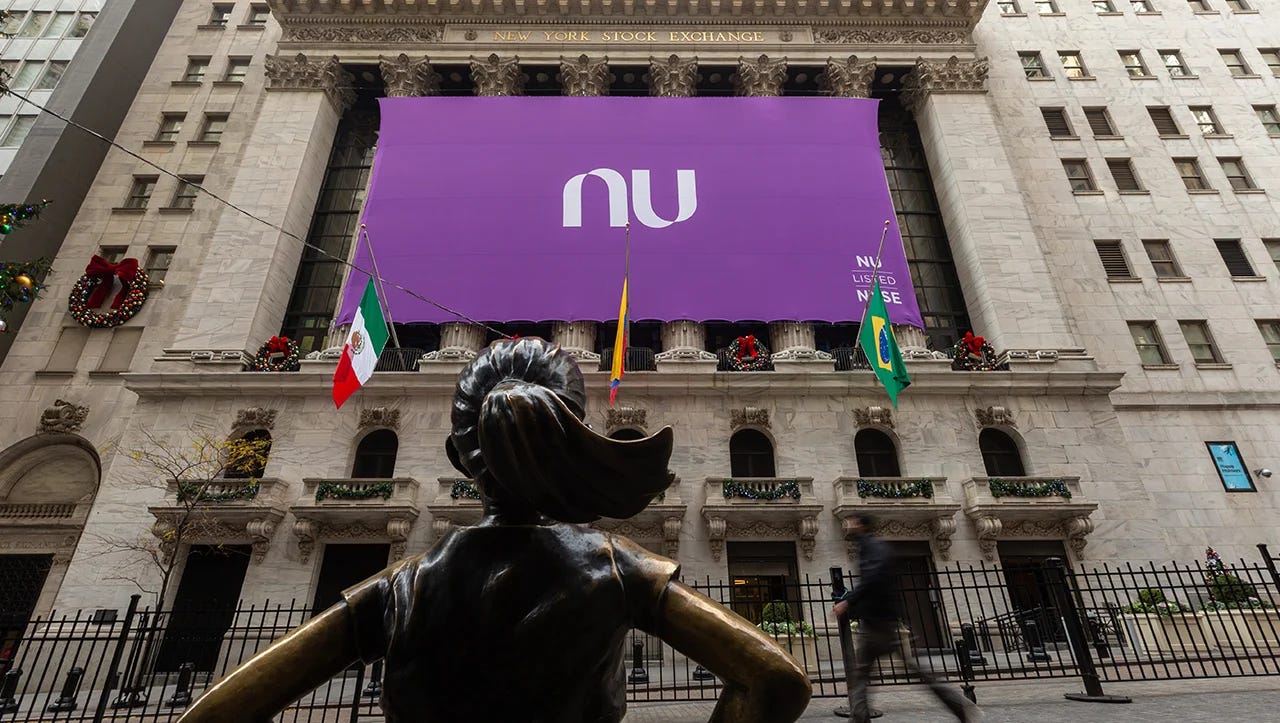
So when I saw this week that Nubank's Mexican arm had become a licensed bank, I read it as more proof of what I watched happen at Rappi. It reinforced the same lesson: the people who build companies like that are the same people you can hire, and most US companies still aren't looking their way.
Two other things are worth your time this week: Colombia swears in a new president on Friday, in a ceremony that has thrown out a century of tradition. And the AI models took a real step up over the last few weeks, which changes how small a strong team can be.
Let's get into it.
🌐 News Shortlist
1. Nubank Just Became Mexico's Biggest Bank.
Recap: On July 10, Mexico's banking regulator authorized Nu México to operate as a full bank, the final step in a conversion from a limited license that began in April 2025. Nubank's Mexican arm already has more than 15 million customers, roughly 15 percent of the country's adults, making it the largest digital bank in Mexico. The license lets it lend and launch products like a payroll account. Nubank has committed $4.2 billion to Mexico through 2030, including $2.5 billion in capital spending over the next four years.
This headline marks a big moment for fintech. But what really matters for anyone building a team is the hiring lesson: Nubank grew by drawing on local talent across Latin America. Nubank began in Brazil and is now Mexico's largest digital bank, thanks to engineers, risk analysts, product managers, and operators from all over Latin America. MercadoLibre and Rappi followed a similar path. World-class companies are being built in the region by local talent, and those people are still here, now training the next generation.
I tell founders this all the time: when you hire in Latin America, aim for the best talent, not just the lowest cost. Many try to save 80 percent and end up with someone who needs constant supervision. If you save 60 percent and hire someone who actually built the product, the value is much greater. For example, a senior person who costs $100,000 a year here would cost nearly $500,000 in the US. That difference is the real opportunity.
It's important to be clear: Latin America is made up of many different markets. Mexico and Argentina are as different as Germany and France, and each country has its own strengths. I usually hire operations people from Colombia, look to Argentina for innovators, and go to Brazil for consultative sales talent. Nubank's success in Mexico shows that the talent pool in these markets keeps getting deeper. Companies should see the region as a place to build, because that is how you get the best people. Those who look for bargains get what they pay for.
Advice: Compare your offers in Latin America to what top local companies pay, not to outdated numbers. Hire for the role and the talent, not the discount. The best candidates know their value, so attract them with meaningful work and a reason to stay, not just a low salary.
2. Colombia Swears In de la Espriella Friday.
Recap: Abelardo de la Espriella is inaugurated as Colombia's president on Friday, August 7, in a ceremony that breaks a century of precedent by taking place outside Bogotá, at a university arena in Cali. Outgoing president Gustavo Petro is boycotting the event and refused to make a military base available for it; a traditional medal ceremony has been dropped, and the handover has played out against fraud claims and warnings about stability. De la Espriella ran on a pro-market program of tax cuts, deregulation, and looser labor rules, reversing the direction of Petro's proposed labor reforms.
We've been following this race since May, and now the chaos is out in the open. The new president is being sworn in far from the capital, the outgoing government is boycotting, and security is tight. That makes the transition look messy, and some of it truly is. But look past the drama, and the hiring signal is clear. Petro's labor policies raised costs with stricter contracts, limits on fixed-term hiring, and higher overtime expenses. De la Espriella is moving in the opposite direction. For US companies hiring for outsourcing, IT, or operations in Colombia, looser labor rules make it easier and cheaper to hire.
There's also a practical currency issue. With a new president and uncertainty around the peso, top senior talent in Colombia now prefers to be paid in US dollars. That isn't a problem. It's already how the best candidates think, and paying in dollars often seals the deal. Make this part of your offer from the beginning. More broadly, Colombia is one of the best values in the region right now. Bogotá became a true tech hub after Rappi's rise, and you can find skilled professionals in their late twenties or early thirties who are experts in their field and work independently. Employer-of-record and severance costs are also lower than in Mexico or Brazil, making total costs easier to manage. The uncertainty around Friday's transition will scare off some companies, but that hesitation is your chance.
Advice: If you've been waiting to hire in Colombia, the inauguration is your sign to act, not to hold back. Start reaching out now while the headlines keep others away, plan to pay senior hires in dollars, and move before a more business-friendly labor market attracts more competition.
3. The AI Tools Just Took a Leap.
Recap: Over the past few weeks, the major AI labs shipped a wave of stronger models. Anthropic released Claude Opus 5 on July 24, described as close to its top-tier intelligence at roughly half the previous price. OpenAI rolled out its GPT-5.6 family, and xAI released Grok 4.5, all within the same stretch. Together, these releases point to more capability at lower cost, which lowers the bar for what a small team can take on.
Whenever AI models improve, people say recruiting will become obsolete. The reality is the opposite. AI has made job boards less useful because anyone can send out thousands of applications, flooding every posting with noise. So companies need someone who can actually find and assess talent more than ever. These tools have made my work better, not unnecessary. That's how I see this new wave of AI: cheaper, more powerful models don't replace people. They make skilled people even more valuable. At our company, we use AI in every process, but a person still interviews every candidate before we present them to a client. It may sound obvious, but most automated hiring tools skip this step. Good judgment is rare. Building something with these tools is easy now. Building the right thing, in the right way, still requires a person.
Here's what this means in practice. People used to talk about the legendary 10x engineer. With today's tools, a strong senior person can be closer to 100x, since the AI handles the volume and the person provides direction. That widens the gap between a small, sharp team and a large one, making each great hire even more valuable than before. You can find this kind of talent in Latin America for a fraction of a US salary, where advanced tools and talent arbitrage come together.
Advice: Don't treat the latest AI model as your whole strategy. Focus on finding people who know how to use these tools well. Before you buy another subscription or platform, check if your team is making the most of what you already have. The real value comes from skilled people, not from having more software.
That is it for this week.
Nubank's new license shows that Latin America builds world-class companies with local talent, and you can hire that talent if you see the region as a place to build. Colombia's inauguration on Friday may look chaotic, but it signals a more business-friendly hiring environment, and the current uncertainty is a chance for companies ready to act. Plus, the latest AI tools make small, capable teams even more valuable.
The trends that move first are the ones to watch right now. That's the focus of this newsletter, and it's also what we help clients with every week at lupahire.com.
Until next time,
Joseph Burns
CEO & Founder, Lupa